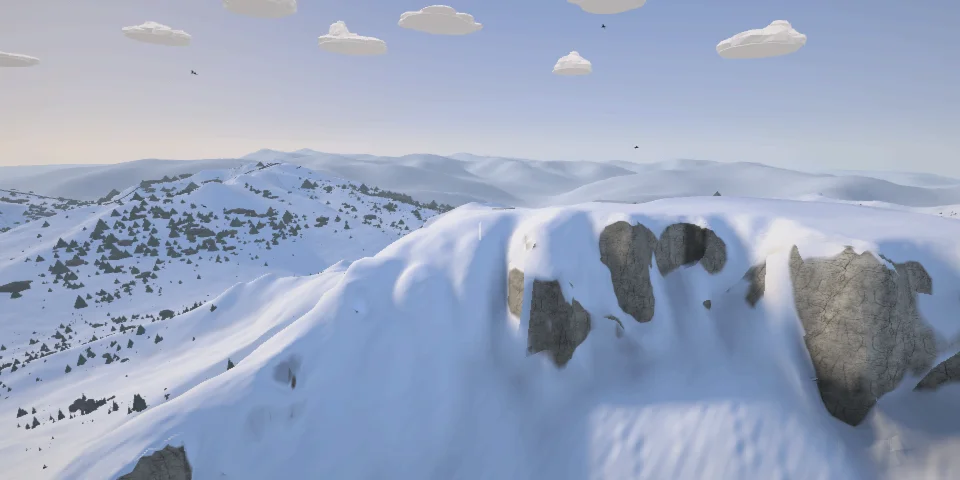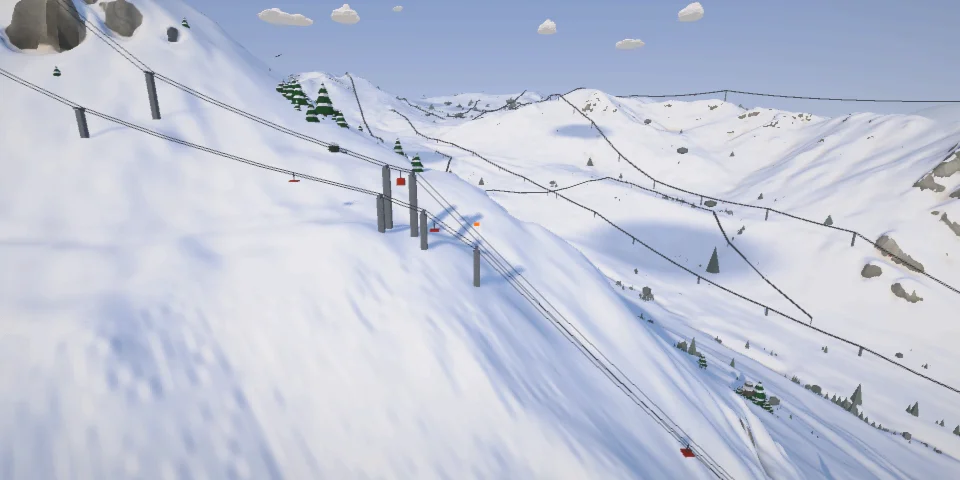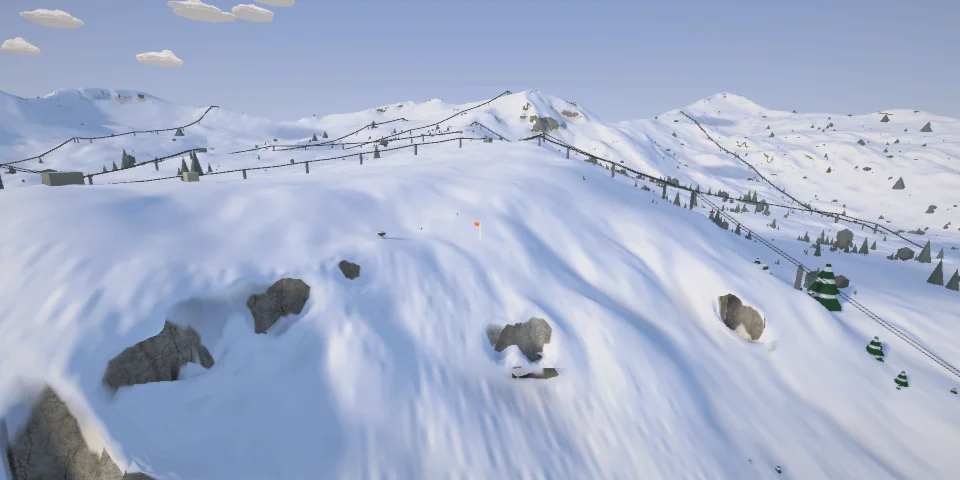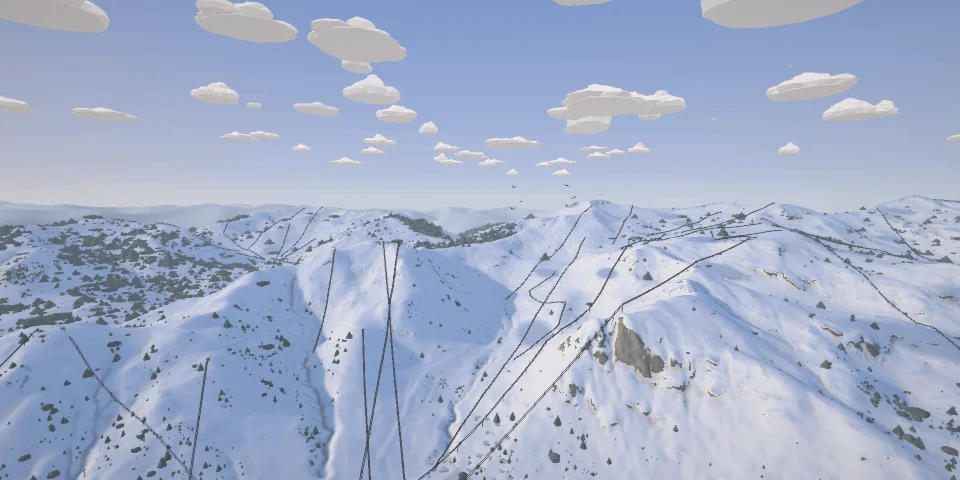
The place
Squaw Valley until 2021, where the 1960 Winter Olympics were held, renamed for the granite chutes under its summit. KT-22, named for the 22 kick turns Sandy Poulsen needed to get down it, carries a lift over the cliffs that Scot Schmidt and Shane McConkey made famous in the ski films, and the Base to Base Gondola crosses the ridge to Alpine Meadows' bowls.
Off-piste Inside the ski area boundary, avalanche-controlled in the season; past it nothing is controlled or patrolled: avalanche terrain, your own risk.
- 36lines to start
The lines
Every line here, with how hard it is.
-
National Chute
■■■■■One of the Palisades' chutes, the granite band under the summit called Palisades Peak (Washeshu Peak, once Squaw Peak), reached by a 20-minute bootpack up the ridge from the Siberia Express.
-
Extra Chute
■■■■■One of the Palisades' chutes, the granite band under the summit called Palisades Peak (Washeshu Peak, once Squaw Peak), reached by a 20-minute bootpack up the ridge from the Siberia Express.
-
Main Chute
■■■■■One of the Palisades' chutes, the granite band under the summit called Palisades Peak (Washeshu Peak, once Squaw Peak), reached by a 20-minute bootpack up the ridge from the Siberia Express.
-
Chimney
■■■■■One of the Palisades' chutes, the granite band under the summit called Palisades Peak (Washeshu Peak, once Squaw Peak), reached by a 20-minute bootpack up the ridge from the Siberia Express.
-
Light Towers
■■■■■Off the Headwall's ridge from the top of the Headwall Express, down into Cornice Bowl, beside the old Cornice II chair's three unmarked chutes.
-
Classic
■■■■■One of the old Cornice II ridge's three unmarked chutes: a true chute two to four ski lengths wide between rock walls, north-east-facing, in view of the Headwall chair, and the steepest of the three.
-
Hourglass
■■■■■The easiest of the old Cornice II ridge's three chutes: a steep start with a cornice to jump or skirt, a bowl that narrows to a short chute between cliffs and opens again, then out by Cornice Bowl.
-
Moseley's
■■■■■KT-22's West Face, named for Jonny Moseley.
-
Chute 75
■■■■■Off KT-22's top a few metres down the Saddle: a north-facing elevator shaft of a run that almost always has good snow, down to Home Run.
-
Rock Garden
■■■■■Down KT-22's west face from the Saddle through the rounded rock of the Rock Garden to Mountain Run, by the Headwall Express bottom.
-
Dead Tree
■■■■■The westernmost of KT-22's west-face double blacks, off the Saddle traverse down to Mountain Run beside the Headwall Express bottom.
-
Saddle Face
■■■■■Off the Saddle, the ridge west from KT-22's top toward the Headwall, down to Mountain Run.
-
Second West Face
■■■■■The lower of KT-22's numbered West Face pitches, below Moseley's and toward the lift line.
-
The Nose
■■■■■The ridge down the KT-22 lift line's west side, toward the Exhibition chair's top; the way to the Fingers.
-
Women's Downhill
■■■■■KT-22's north-east face from the Olympic Lady's top.
-
The Fingers
■■■■■The cliff band of volcanic rock under the KT-22 chair, in full view of the lift: 48°, about 200 m of vertical, airs with blind roll-overs, a no-fall zone.
-
McConkey's
■■■■■KT-22's summit cliff, beside the lift's top: once Eagle's Nest, renamed for Shane McConkey after his death in 2009.
-
Funnel
■■■■■A double black from Emigrant's top down the Backside to Shirley Lake.
-
Main Backside
■■■■■Off the Backside traverse from the Granite Chief chair's top, north to Shirley Lake.
-
Corkscrew
■■■■■One of the Backside's runs falling north from Emigrant's shoulder to Shirley Lake.
-
Arete
■■■■■Down the Backside's arête from Emigrant's shoulder to Shirley Lake.
-
Silverado
■■■■■The north face under High Camp, entered through the numbered gates along the rim: the Freeride World Tour's venue in 2009 and 2010, both times moved here from the Tram Face (a storm in 2009, an avalanche in 2010).
-
Bailey's Cirque
■■■■■A double-black cirque on Silverado west of Tram Bowl, through the gates on the rim west of High Camp, down to Trail 90 and the Silverado chair's bottom.
-
The Far Side
■■■■■The easternmost open terrain of Silverado's Shirley Canyon side, through gates 7 or 8 off Broken Arrow's top: a north-facing ridge with many options, out by Land Bridge.
-
Jake's
■■■■■Off lower Trail 90 on Silverado, through the first boundary gate at the steep pitch: a large gully left of a rock ridge under the chair, down to the Silverado chair's bottom.
-
Beaver Bowl
■■■■■One of Alpine Meadows' North Bowls, about 15 minutes' walk along the ridge from the Summit Six top: stay mid-bowl, the sides are steepest; out through Three Sisters.
-
South Beaver
■■■■■Beaver Bowl's southern side, off the ridge north of Ward Peak.
-
Estelle Bowl
■■■■■About 30 minutes along the ridge from the Summit Six top: a big cornice and rocks on skier's right, a mellower entry on the left, and a second set of cliffs and wind lips lower down.
-
The Castle
■■■■■Steep spines beyond the Estelle ridge, called Alaska-style, at the far end of the North Bowls hike.
-
Bernie's Bowl
■■■■■A double black further north along the ridge than Estelle, falling south-east toward the base and the parking lot.
-
The Buttress
■■■■■Steep, technical and highly exposed, hanging above the parking lot.
-
Wolverine Bowl
■■■■■North from the Summit Six top into Wolverine, mainly a route; the D chutes end in it.
-
The Keyhole
■■■■■From the top of Summit or Alpine Bowl, at least ten minutes' walk east along the ridge past Ward Peak, through a jagged cut in the rocks: a steep zone that could easily host a big-mountain contest.
-
High Yellow Gully
■■■■■Off the Sherwood Express top down the front side under the Sherwood cliffs, to the base and Summit.
-
Counterweight Gully
■■■■■Off the Sherwood Express top beside High Yellow, down the front side under the Sherwood cliffs.
-
Scott Chute
■■■■■Straight down under the Scott chair from its top: a wide chute, about 100 ft, with moguls and optional small drops.